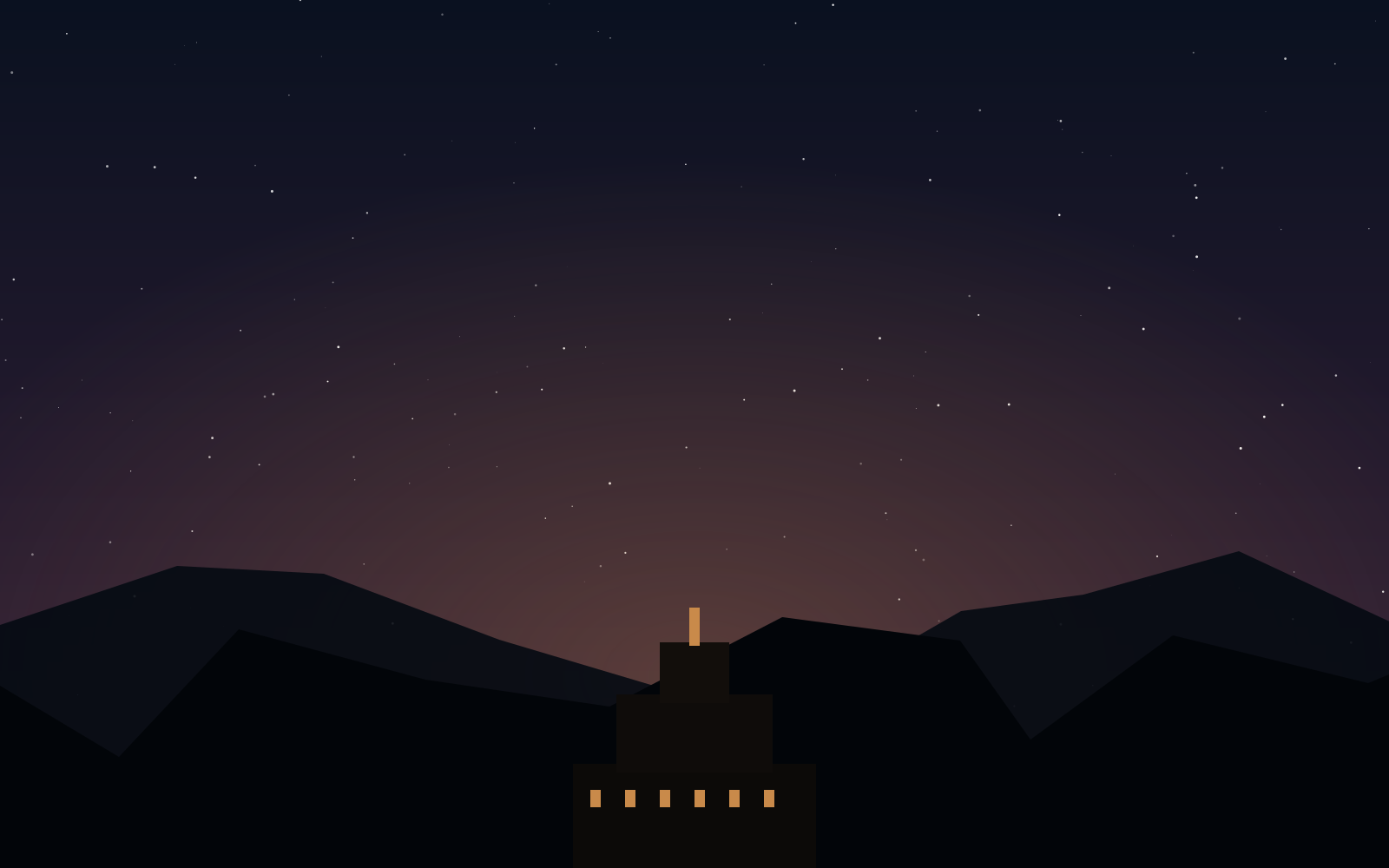

There are places on earth where the night is merely dark. And then there is Hanle, where the night is a presence — vast, luminous, and old beyond reckoning.
A Bortle Class 1 sanctuary
Astronomers measure darkness on the Bortle scale, from 1 (pristine) to 9 (inner-city). Hanle sits firmly at Class 1. On a moonless night, the Milky Way is bright enough to cast a faint shadow, and the zodiacal light rises like a ghost above the horizon.
In 2022, the region around Hanle was designated the Hanle Dark Sky Reserve — India’s first — protecting 1,073 square kilometres of night from light pollution.
Why here, of all places?
Three things conspire to make Hanle extraordinary:
- Altitude. At 4,500 metres you sit above more than 40% of the atmosphere, and above most of its water vapour and turbulence.
- Aridity. The Changthang is a cold desert. Dry air means steady, transparent skies and 300+ clear nights each year.
- Isolation. The nearest city is hundreds of kilometres away. There is simply no light to pollute the sky.
What you'll see
| Object | Best season | Notes |
|---|---|---|
| The Milky Way core | May–September | Rises after midnight in spring, earlier by late summer |
| Andromeda Galaxy | Autumn | Visible to the naked eye |
| Zodiacal light | Spring & autumn | A pyramid of light after dusk |
The first time guests see the Milky Way here, they almost always fall silent. Some cry. It is that kind of sky.
Bring warm layers, let your eyes adapt for twenty minutes, and look up. The universe has been waiting.